
Board games that teach themselves

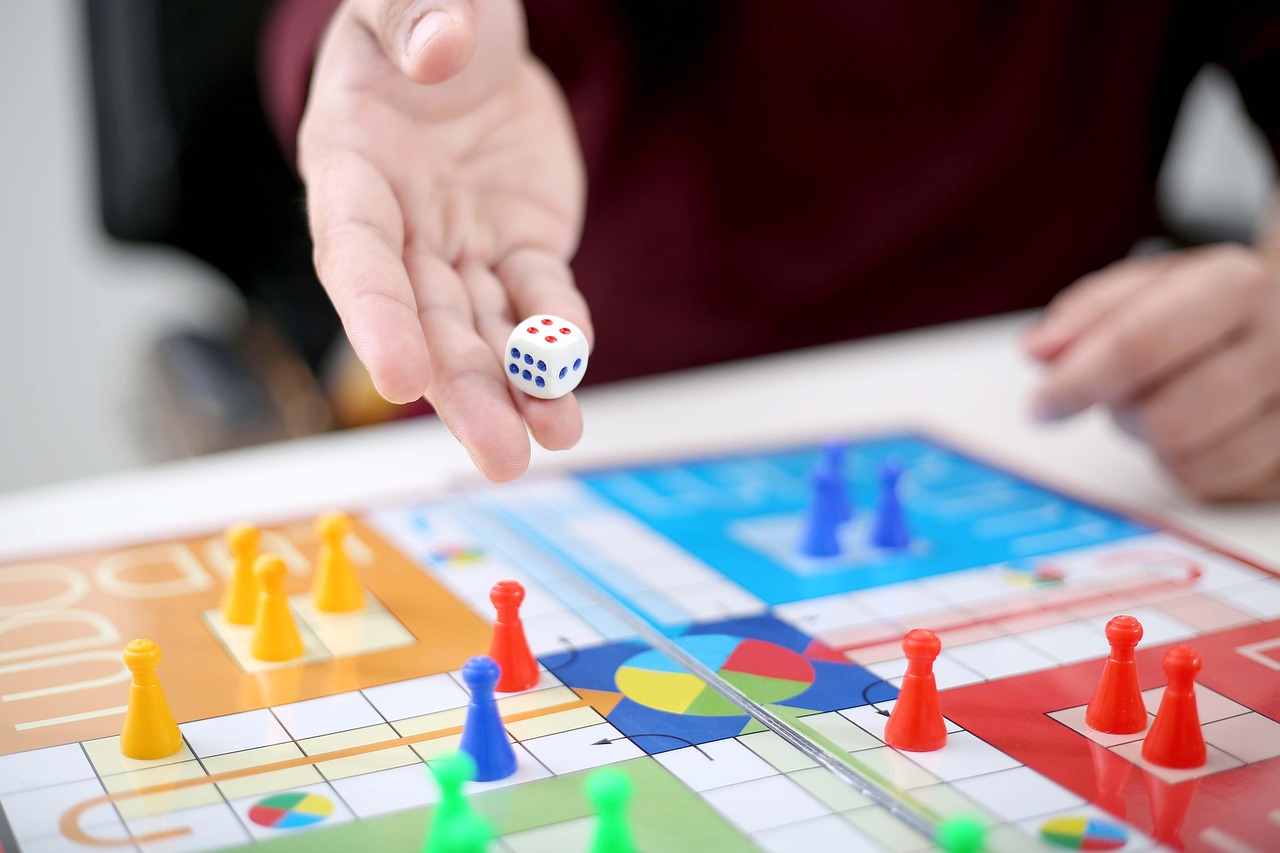
Board games that teach themselves
Most board games that end up unplayed were not bad purchases. They were games where somebody had to read fourteen pages aloud to four people who had already opened the snacks, and by the time the first turn happened the evening had lost its momentum. The game never recovered from that, and it never came off the shelf again.
A game that teaches itself avoids that entirely. It is not the same as a simple game — some genuinely deep titles explain in three minutes — and it is not about the age on the box. It is a property of how the rules are structured, and it is possible to spot before you buy.
Count the number of things a player can do
The clearest signal is the size of the action space. If on your turn you may do exactly one of three things, the game can be explained in a sentence and understood in a turn. If you may do one of nine, with exceptions attached to four of them, the explanation becomes a lecture no matter how well written the rulebook is.
Depth does not come from the number of options; it comes from what those options interact with. Some of the most demanding games on our shelf give you two choices a turn and make both of them difficult.
Look for rules that live on the components
The best-designed games put the rules where they are needed. Costs printed on the card that charges them, scoring shown on the board where it happens, turn order marked on the table rather than remembered. When information is on the component, nobody has to hold it in their head, and nobody has to be corrected mid-turn.
Open the box in the shop and look at a card. If you can tell what it does without consulting anything, that is a good sign about the whole design.
The first turn should be obvious
A game that opens with a genuine decision is harder to start than one that opens with an obvious move. That first easy turn is doing important work: it lets everybody see the loop before it matters. Games that begin with a complex setup choice — a starting hand to draft, a faction to pick with asymmetric powers — always take longer to get moving.
This is why asymmetric games, however good, are rarely the right choice for a group that has not played before.
Play time on the box is a range, not a promise
Published play time assumes everyone knows the rules. A first game of anything takes roughly twice as long, and a first game with a group that is also talking takes longer still. A box that says thirty minutes will occupy an hour the first time, which is fine — a box that says ninety will occupy most of an evening, which may not be.
For a game intended to come out on a weeknight, the printed figure is the number to shop by, and lower is genuinely better.
Player count is not a range, it is a preference
A game listed as two to six players is rarely equally good at both ends. Many are best at a specific count and merely functional elsewhere. Where a maker states a recommended count we put it on the listing, because it is far more useful than the range printed on the front of the box.
If your table is usually the same size, buy for that size. A four-player game played at four beats a two-to-eight game played badly at seven.
Dexterity and stacking games sidestep rules entirely
Tower-stacking, balance and speed-matching games have almost no rules to explain: the physical situation is the rules. Everybody understands not knocking the tower over without being told. That makes them the reliable choice for mixed groups and for tables with a wide age spread.
They also have a natural end point, which matters more than it sounds — a game that ends when something falls over never overstays.
Abstract strategy has almost no rules and plenty of depth
Tile-laying and pattern-building games generally explain in under five minutes because there is no theme to translate: you take a tile, you place it, you score for the pattern. What makes them demanding is the decision, not the instruction.
They are also the games that hold up over many plays, because the interest comes from the position rather than from surprise.
What we ignore when stocking
We do not stock by review score, by award sticker or by rank on any list, and we do not repeat those things on the listings. Not because they are worthless, but because they say nothing about whether a specific group will enjoy an evening with the box, which is the only question that matters at a counter.
What goes on the shelf is what somebody here has opened, read and played at least once.
The practical test before you buy
Ask how long the explanation takes and ask what a turn consists of. If both answers are short, the game will get played. If the answer to either begins with “well, it depends”, it is a game for a group that already likes that kind of game.
Both answers are available at the counter — the number is on the contact page and the shop is open until ten five nights a week.
Where to look on the site
Start with family board games for the self-teaching end, strategy and abstract games for depth with short rules, and dexterity and party games for tables where nobody wants a rulebook at all.
There is more on matching a game to a group in choosing a game by player count, and delivery is set out on the shipping policy page.
Teaching a game you have only just learned
Shop staff do this constantly and it is a useful skill for anybody who buys games. The trick is to explain the goal, the turn and nothing else, then start playing and introduce each remaining rule at the moment it first becomes relevant. Most rulebooks are written as reference documents rather than teaching scripts, and reading one aloud from the top is close to the worst possible order for a table waiting to begin.
It also helps to say out loud that the first game is a practice game. It removes the stakes, makes it acceptable to take a move back when somebody has misunderstood something, and turns the inevitable mid-game rules correction into a normal event rather than an argument. Almost every game is better on the second play; the first exists to get there.